
LOCATION: 1385 Grant Avenue
CLIENT: SMITH Agency
INDUSTRY/CATEGORY: Retail/Strip Mall
PROJECT TYPE: Exterior re-clad
When a few tenants left an aging strip mall in one of Winnipeg's most established neighbourhoods, the owners had to decide whether to manage the decline or change what the building was.
THE CHALLENGE
1385 Grant Avenue sat in a walkable, tree-lined pocket of River Heights, the kind of street where the coffee shops are good and tenants have options. The building itself told a different story: beat-up metal cladding, aging brick, a canopy that had seen better decades. Good bones, wrong skin.
When tenants vacated, the owners faced the decision every commercial landlord eventually reaches. Drop the rent, backfill with whoever shows up, and preserve the capital. Or use the vacancy as the moment to change what the building actually was.
The first option is the one that feels safe. It's also the one that quietly costs more. A lower rent locks an owner into lower returns for years, while construction costs keep climbing and the building keeps aging around the tenants it attracted at a discount. The gap between where the asset sits and where it could sit only gets wider. It's the same logic behind a bargain bid that looks cheap on day one and expensive by the time the gaps in scope surface. The efficiency was never real.
The owners chose to reposition instead of retreat. That decision, more than any material or finish, is what this project is actually about.
WHAT MADE THE DIFFERENCE
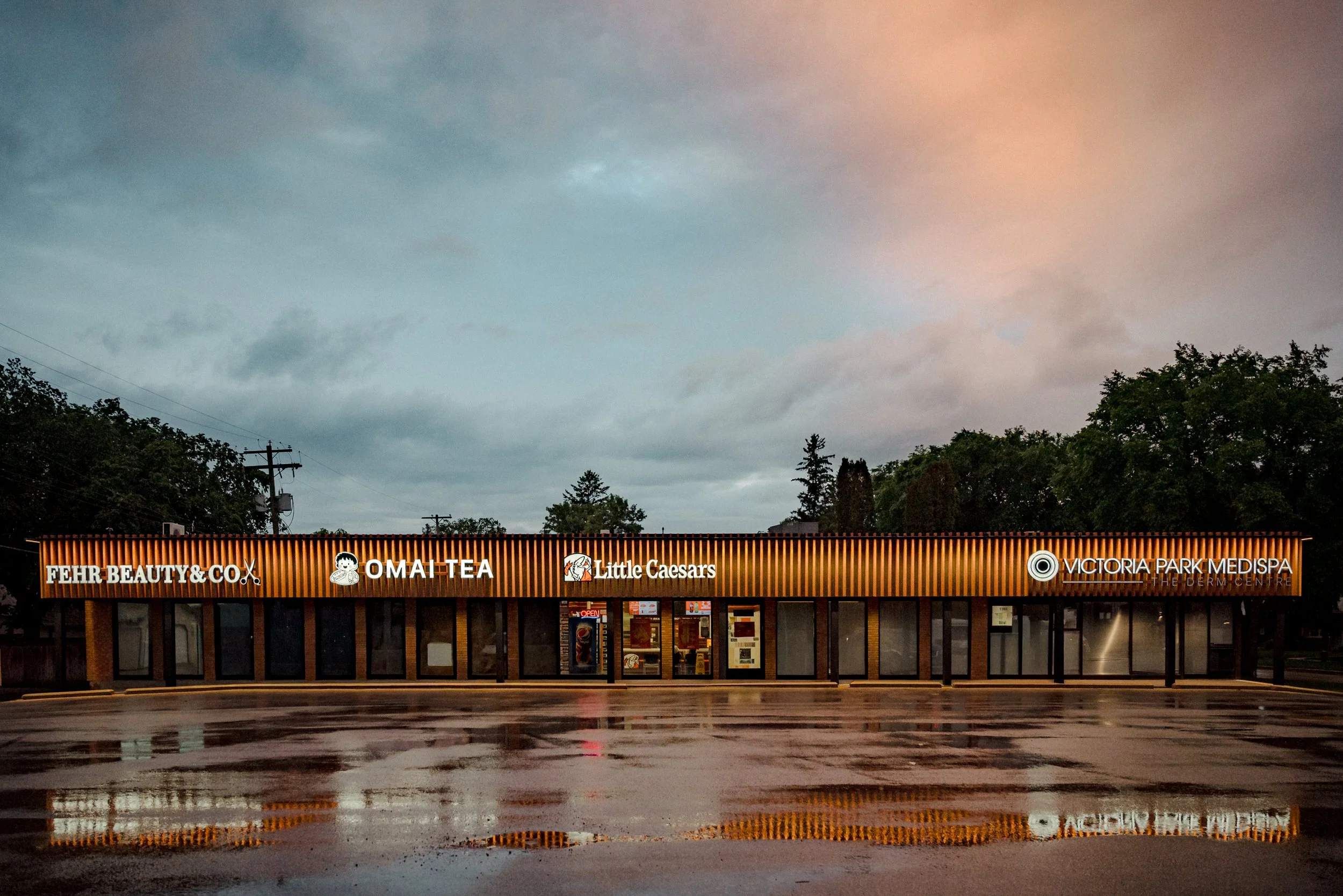
Design rooted in the neighbourhood, not applied on top of it. LCM's design team built an exterior language out of what River Heights already was: warm, considered, premium without being precious. A full re-clad in aluminum vertical slat paneling replicated the richness of wood grain without the long-term maintenance risk of the real thing. The existing canopy was preserved and integrated rather than demolished. Original brick was retained where it was sound, giving the new cladding something honest to sit against.
Budget certainty instead of budget surprises. Pre-construction investigation uncovered how the old canopy connected to the existing structure before construction began, turning a detail that could have surfaced mid-build as a costly change order into an early design decision instead. As the project progressed, several initial assumptions proved conservative. The result was credits returned to the owner, not additions on top of the original number.
One team owning the process, start to finish. Tenants continued operating throughout construction. A single site superintendent managed the phasing, issued regular schedule updates to the property managers, and stayed the one point of contact for anything that came up. There was no gap between designer and builder for a problem to fall into, and no ambiguity about who owned it if one did.
THE OUTCOME
New tenants signed leases before the job was finished. While LCM's crew was still completing the facade, the incoming tenants were already coordinating their signage. They weren't signing on to a half-vacant strip mall with a fresh coat of paint. They were signing on to a building they were glad to put their name on.
That's the return on choosing repositioning over retreat: not just a better-looking building, but one that performs differently, for a different calibre of tenant, without a single budget surprise along the way.